The symbol of the city of Lucca was built between 1513 and 1645, stretching 4.2 km in length, 12 m in height, and 30 m in width.
Calling them “walls” doesn’t do them justice, as they also serve as gardens and elevated promenades, fully accessible on foot or by bike, offering a stunning view over the city’s palaces, churches, towers, and narrow streets.
Art exhibitions, concerts, and theatrical performances are also held on the walls and in the restored underground areas, which are open to visitors.
One of the most iconic symbols of the city of Lucca.
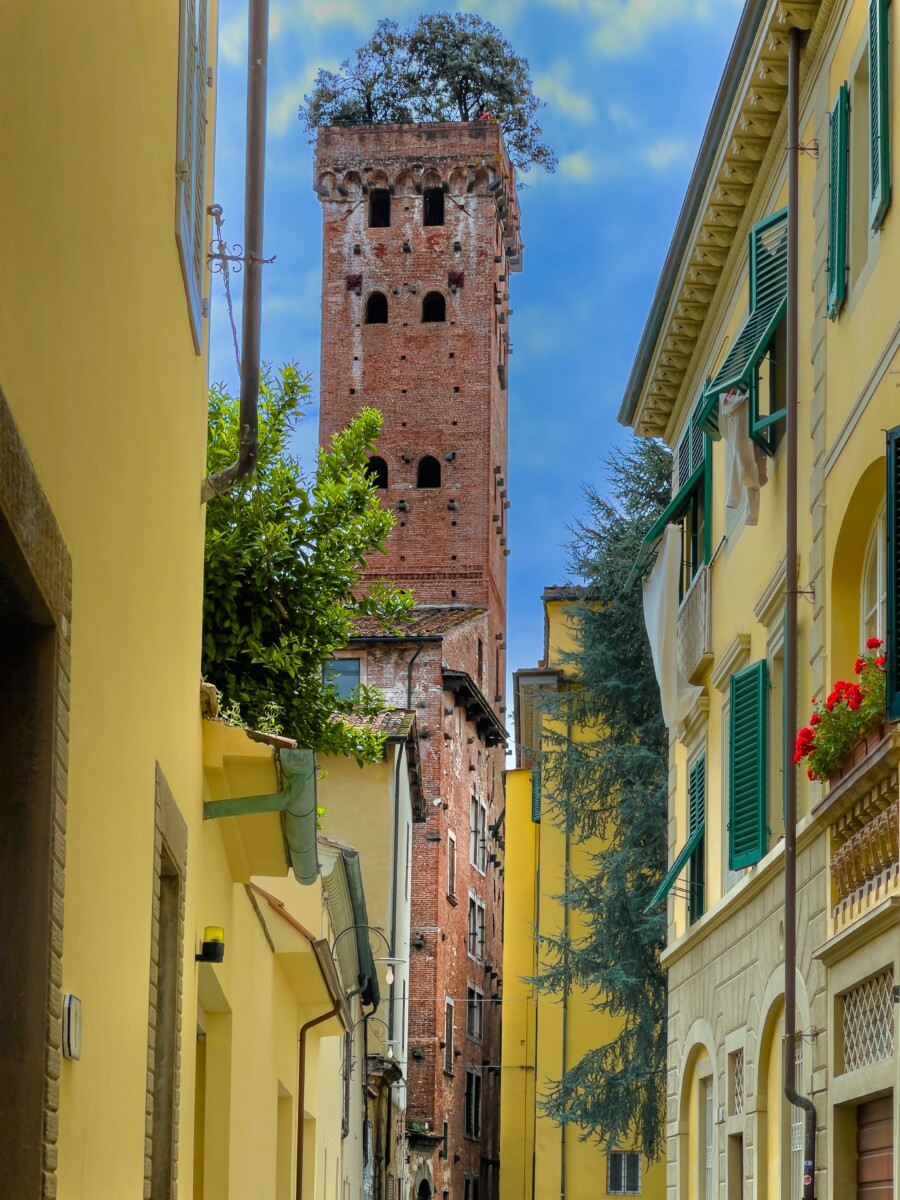
The Torre Guinigi (44.25 m high), commissioned by the Guinigi family — wealthy and powerful Luccan merchants of the 14th century — is today the only remaining witness of the more than 100 towers that once adorned the city in medieval times.
Climbing its 230 steps, you reach the top, where a rooftop garden with centuries-old holm oaks welcomes you. From here, you can enjoy a unique and enchanting view of the historic center, as well as the surrounding mountains: the Apuan Alps, the Apennines, and the Pisani Hills.
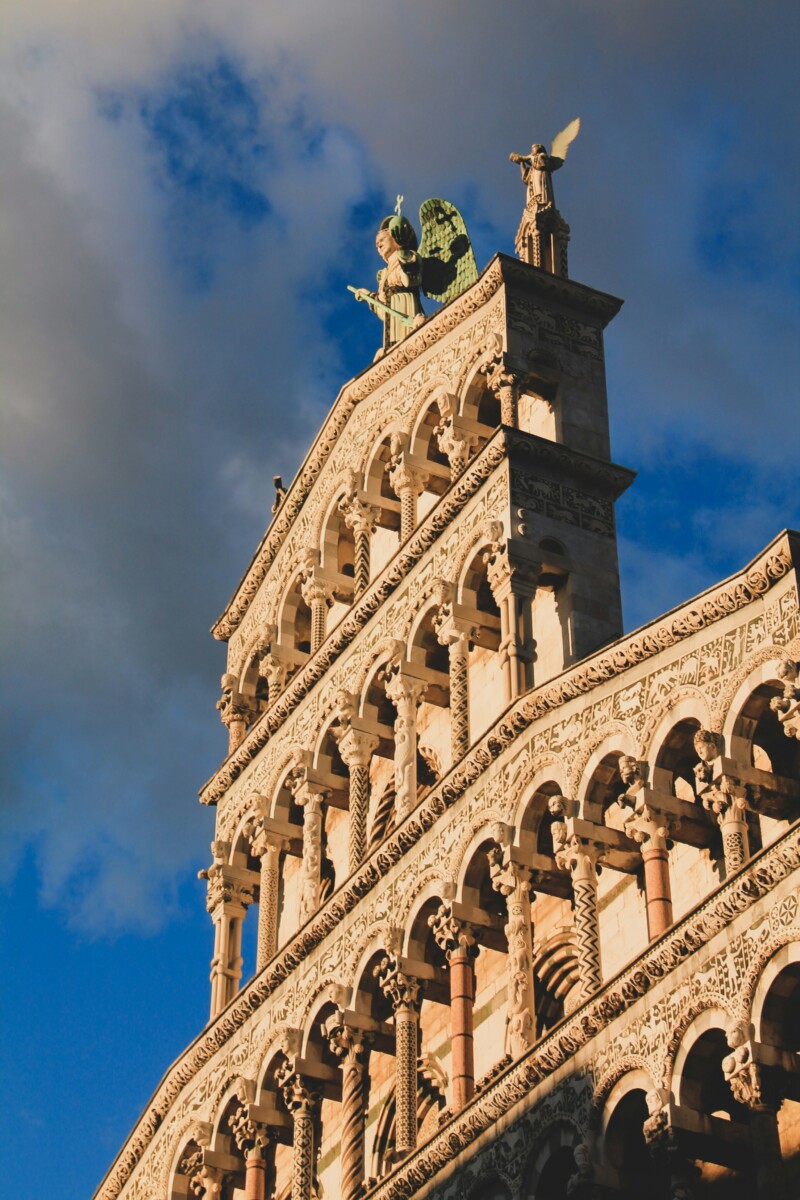
The Church of San Martino is the city’s main religious monument and one of the finest examples of Romanesque architecture. Inside, it houses true masterpieces of medieval sculpture: the tomb of Ilaria del Carretto (by Jacopo della Quercia), the Last Supper (by Tintoretto), and the Volto Santo.
The 12th-century bell tower is the tallest in the city (60 meters), and after the latest restoration in 2016, visitors can climb to the top for a breathtaking view of the city and surrounding landscape, from the Pisani Hills to the Pizzorne mountains.
The church’s exterior features an exceptionally tall façade, richly decorated with sculptures and inlays, including the 4-meter-high statue of Archangel San Michele at the very top.
The square surrounding the church is lined with numerous shops and cafés.
This is undoubtedly one of the most striking Romanesque churches in all of Tuscany. Particularly enchanting is the late 13th-century mosaic on the façade, created partly by Byzantine-trained artists and later by artists associated with the local Berlinghieri workshop.
Since 2023, it has been possible to climb the narrow staircase to the top of the bell tower (55.20 meters high). From its 31 openings, visitors can enjoy a unique and spectacular view of the historic center and the Lucca Plain.
It is from the Basilica of San Frediano that the enchanting Luminara di Santa Croce begins every September 13th.
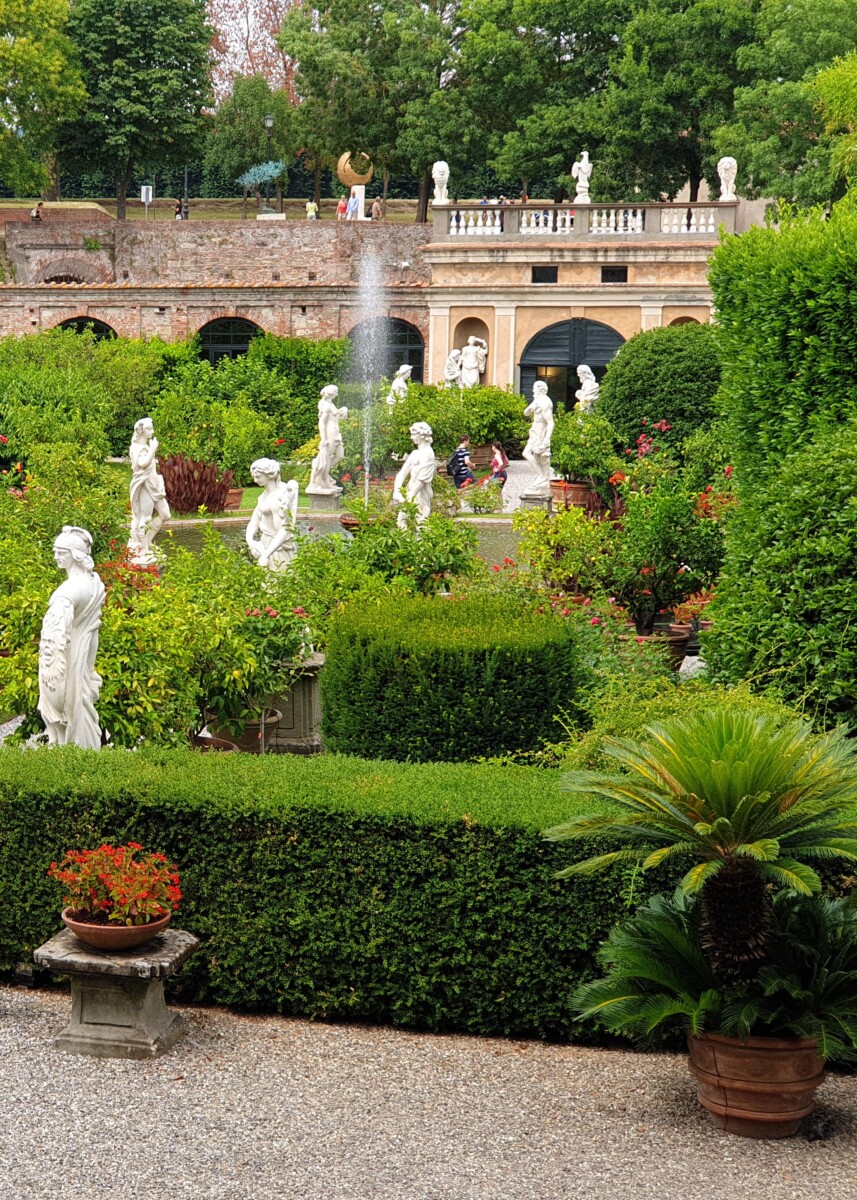
This splendid 17th-century palace is renowned for its Italian Baroque garden and its museum. Visitors can explore the noble floor and the rooms hosting a permanent exhibition of medical and surgical instruments, as well as ancient medical texts belonging to Pietro Pfanner (1864–1935), surgeon, philanthropist, and mayor of Lucca from 1920 to 1922.
Thanks to the charm of its gardens, the palace has been chosen as a set for several major films.
Restoration works on the garden and the brewery building, which began in 2024 and were completed in March 2025, contributed to significant architectural and botanical enhancement.
Once the residence of the Mansi family (wealthy merchants), the palace was later transformed into a “representative palace” and eventually into the current museum.
Inside this typical Lucchese residence — which preserves much of its original furnishings and a precious cycle of Brussels-made tapestries — the Pinacoteca houses paintings from Italian and international schools dating from the 16th to the 18th century. On the second floor, sections dedicated to the 19th and 20th centuries are displayed, while the former palace kitchens now host the Maria Niemack Rustic Weaving Workshop, exhibiting 19th- and 20th-century looms and tools.
The composer’s birthplace, converted into a museum in 1979, reopened to the public in September 2011 after extensive restoration works.
Located in the historic center of Lucca, on the second floor of an ancient building where Puccini was born and lived until his youth, the museum preserves original furnishings and precious personal items: the Steinway & Sons piano on which he composed Turandot, autograph scores, letters, photographs, sketches, and documents related to his career. Visitors can also admire the Turandot costume worn at the opera’s premiere at the Metropolitan Opera in New York in 1926.
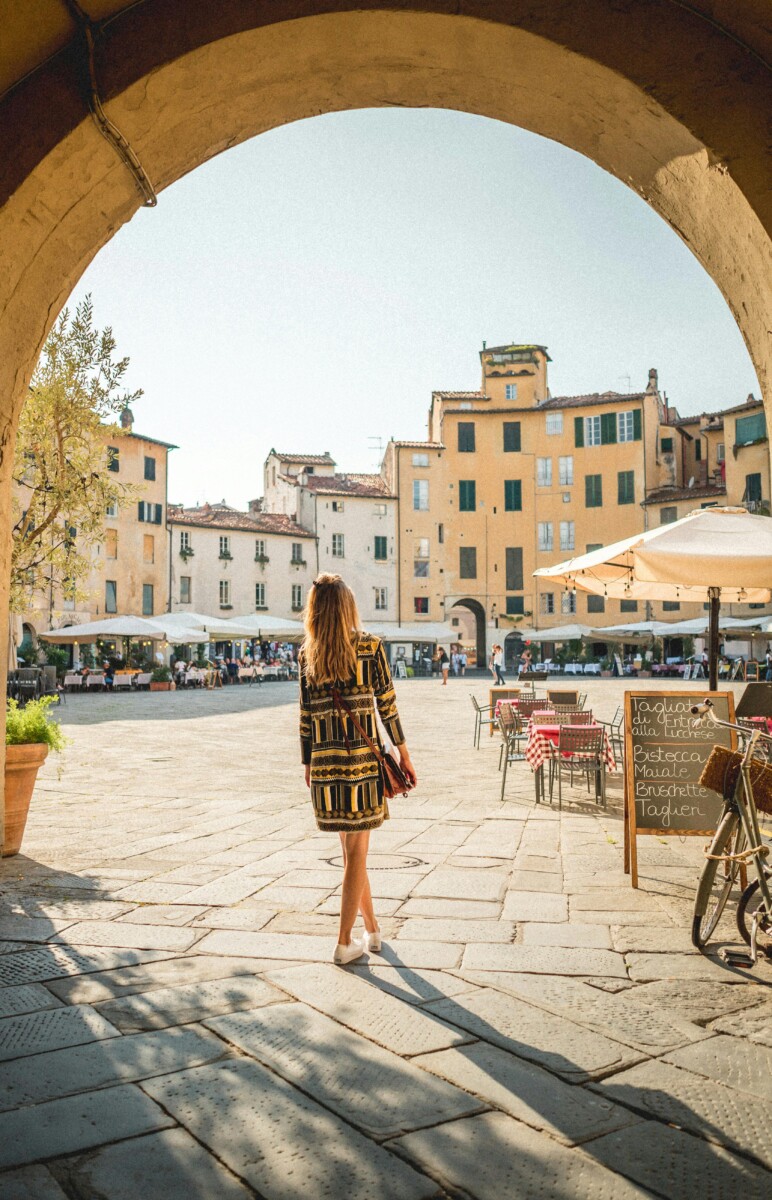
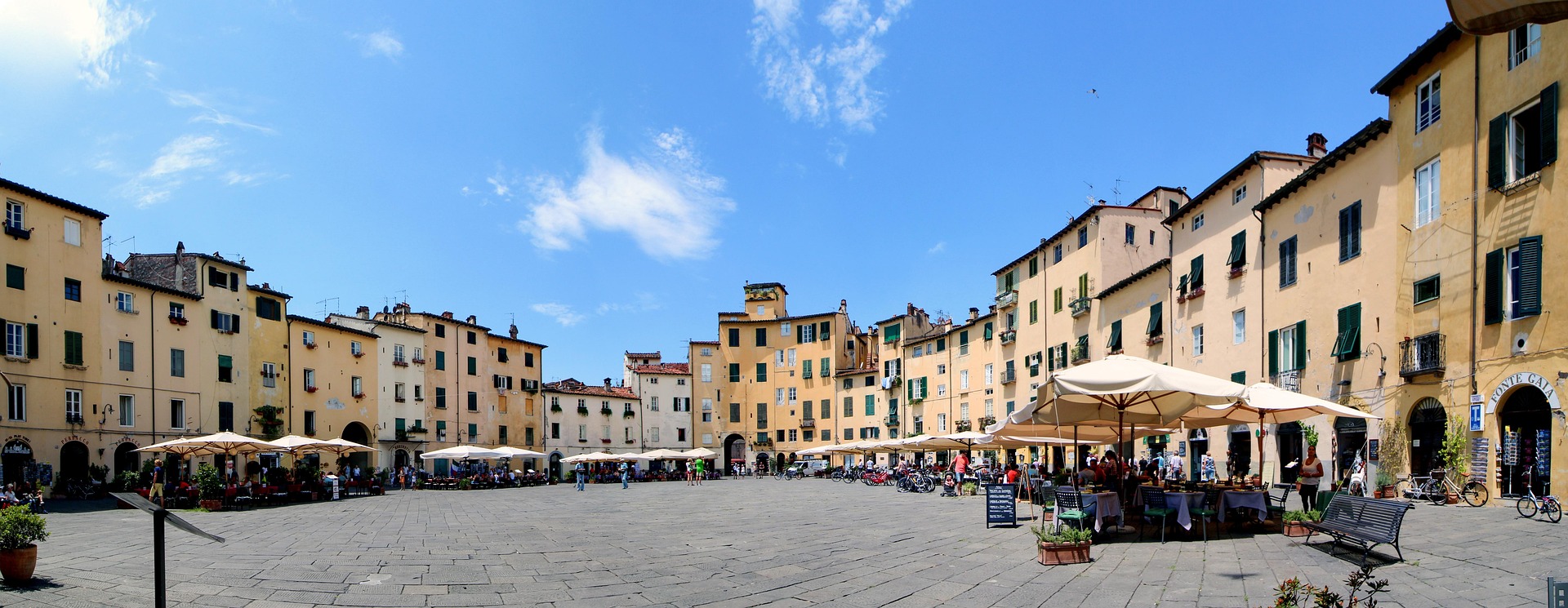
The most famous square in Lucca, unique and remarkable for its elliptical shape. Access to the square through its four gates creates a delightful element of surprise. Charming restaurants, cafés, and boutiques surround the square, adding to its unique atmosphere
The city’s main street, narrow with tall buildings that in some points seem almost to touch. Looking up, you can admire elegant façades from different periods: noble palaces and homes of silk workers, featuring biforas decorated with marble columns and stone frames from Guamo.
This area is home to historic artisan workshops, cafés, and Liberty-style shops, alongside jewelry stores, perfumeries, and international franchise outlets.